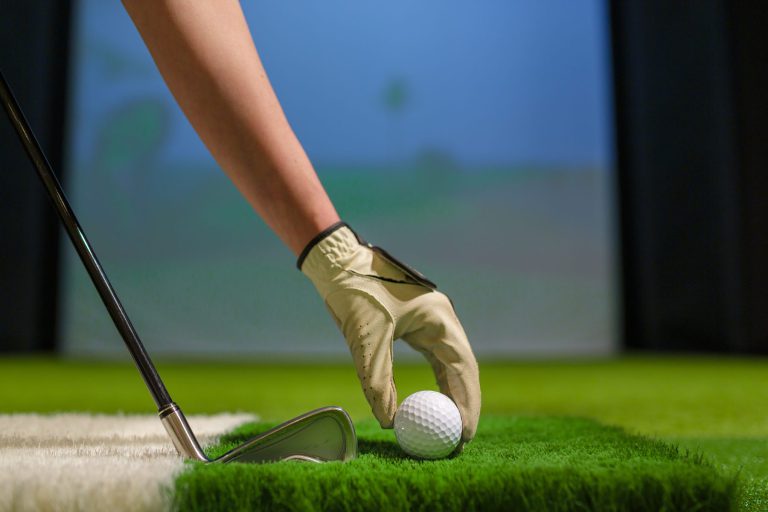
Tees are the part of a golf simulator nobody thinks about until one snaps mid-session or, worse, flies into the screen. The right tee for a hitting mat is not the one in your golf bag. Here is what works, what to avoid, and why every tee you buy should be treated as a consumable.
Do not use wooden tees indoors
This is the one rule. A wooden tee is designed to snap or fly out of the ground on a full swing, and indoors that means it can launch into your impact screen at speed, right behind the ball. Sharp wooden fragments cut screen fabric, and even an intact tee leaves marks. The same goes for the rubber tee holders that accept a standard wooden tee: the holder stays put, the wooden tee does not.
Plastic tees are not much better. They are stiff, they can fly, and the pieces are just as unfriendly to a screen. Use tees made for simulator mats.
What a simulator tee should be
- Rubber or flexible polymer that bends on impact rather than shearing or launching.
- A base that sits in the mat (a peg that pushes into the hitting strip) or a weighted base that stays put on the surface.
- Multiple heights, so you can tee a driver, a fairway wood and a hybrid the same way you do outdoors. Consistent tee height indoors is one of the easiest ways to get numbers that match the course.
- A clean, uniform colour that does not confuse camera-based launch monitors. Bright, non-white tees are ideal.
A cheap option that works
If you want a bag of tees to get started, these do the job. They are inexpensive, come in a few heights, and they sit properly in a mat. Expect them to break sooner than a heavier tee, especially at driver height.

Chinada Tech Golf Simulator Tees
Cheap, effective, and they break easily. Buy a spare pack.
Buy now on Amazon.caEvery tee breaks. Plan for it.
No simulator tee lasts forever. A driver at 100 mph or more hits the tee on most swings, and the rubber fatigues, softens and eventually splits. This is normal, and the cure is the same as it is for simulator golf balls: rotate them.
Keep several tees in the bay and switch between them during a session. A tee that is hit a hundred times in a row heats up, softens and wears far faster than one that gets a break. Spread the hits around and the whole set lasts longer.
When a tee starts leaning, tearing at the base or leaving rubber on the ball, retire it. A worn tee gives inconsistent height, and inconsistent height gives inconsistent launch numbers.
Our recommendation: keep a quantity on hand and replace them as needed. A dozen tees across two or three heights is a sensible stock for a home bay; a commercial bay should keep more. Order them with your balls so you are never one snapped tee away from cutting a session short.
Our own tees
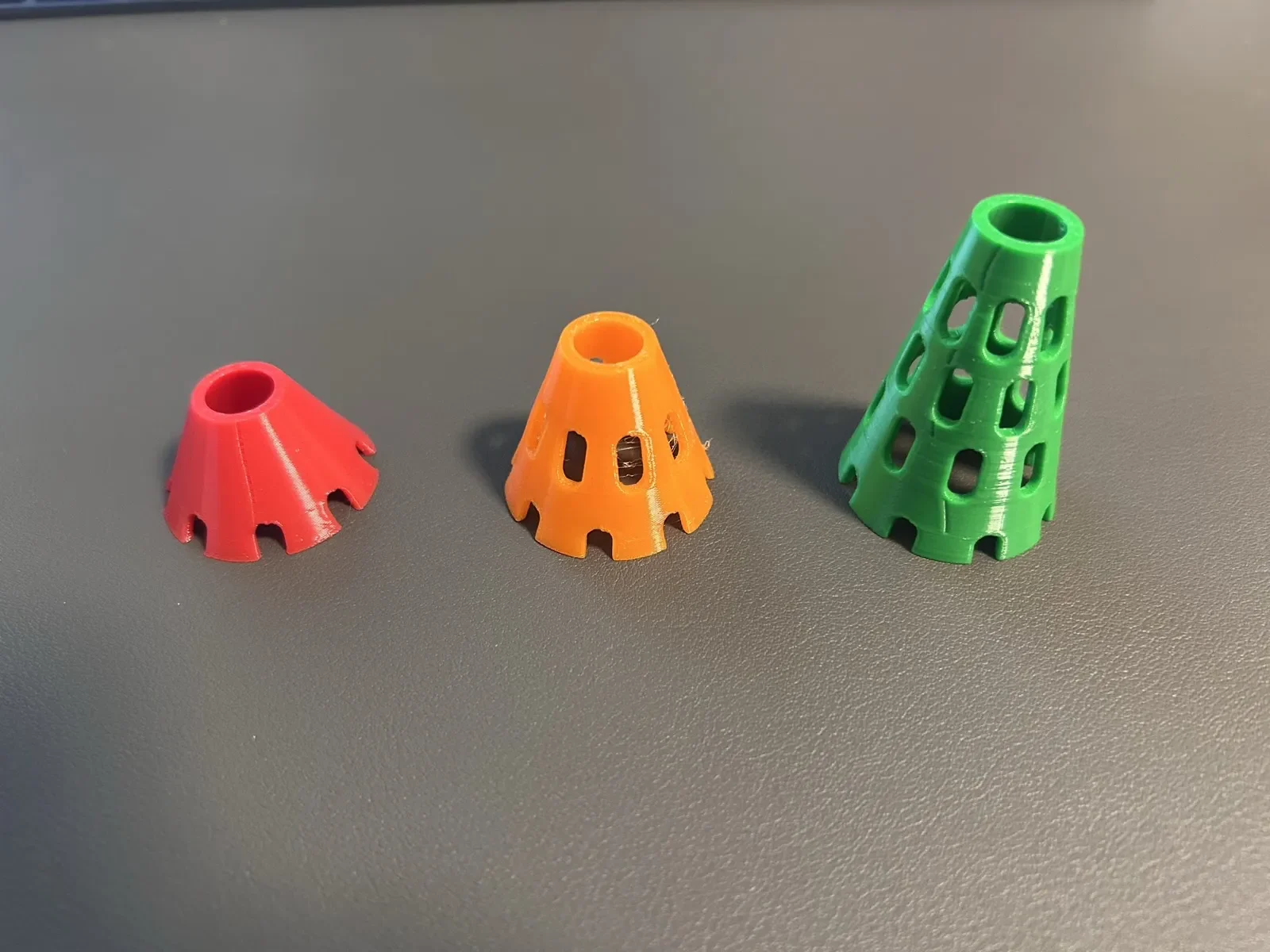
We were replacing tees so often in our own bays that we started making our own simulator tees. They come in a range of heights, they are noticeably sturdier than the bargain packs, and they still follow the rule above: after enough sessions they will break and need replacing. That is the nature of a rubber tee taking a driver every swing. What you get is more sessions per tee and a consistent height every time.
Tethers and anchors: skip them
You will see weighted tethers sold for simulator tees: a small weight or anchor with a cord that clips to the tee so it cannot fly. If your tee sits properly in the mat, it does not go anywhere on its own, and the cord adds one more thing to trip the ball or catch a club. We have tried them and we do not see the value. Spend the money on a spare pack of tees instead.
Quick checklist
- Rubber or flexible tees only. No wood, no hard plastic, no holders that take wooden tees.
- Buy a few heights and match what you use outdoors.
- Keep several in the bay and rotate them during a session.
- Keep a quantity on hand and replace them as needed.
- Retire any tee that leans, tears or leaves rubber on the ball.
- Skip the tethers.